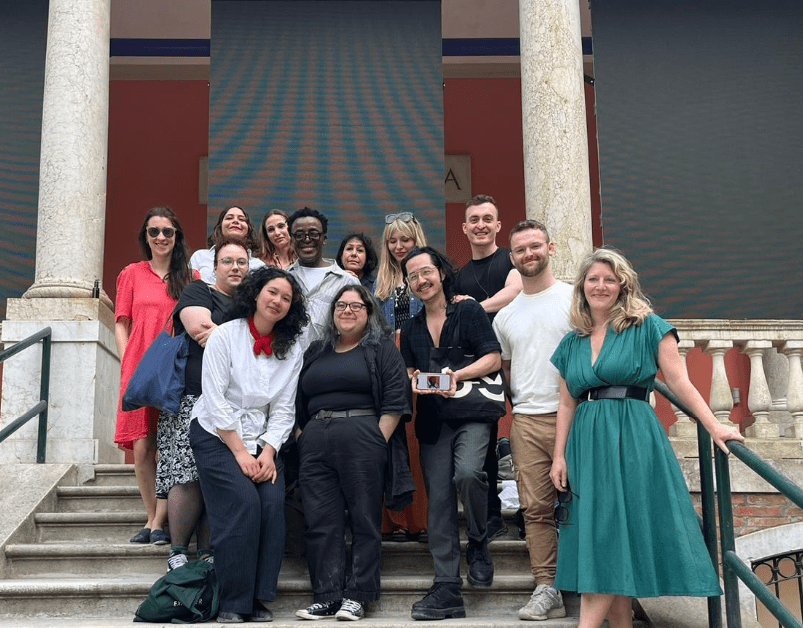
In 2024 in partnership with Touchstones Rochdale, I was selected through an application process to represent Touchstones at the Venice Biennale in April – May 2024 as part of the Venice Fellowship Scheme with the British Council.
Find out more on the links below.
I set out on this project to research the following questions:
- How does Touchstones tackle racial injustice to better represent the diasporic history of Rochdale and serve the community not on racial bias but on the need of the community?
- How do we take accountability, rather than apologise for, post-colonial legacies and how do we best represent pre-colonialisation within Touchstones?
- And can how we do this successfully as we create and explore *fluid and temporal displays* within a newly redeveloped multi-medium institute? *Film, live performance, more environmentally sustainable digital ways of displaying art culture and history.
The questions I had set out to explore were quite complex and large. There was no set time limit bestowed upon myself of having it completed by the end of the trip. I do believe this is only the start of my research. During my time here, I’ve been able to keep a visual physical art book of a collection of my thoughts, feelings, ideas and where I’ve been. The book itself transcends multi-medias as I explore how to digitally incorporate elements into a physical book and explore the lines between autobiographical memoir and creative storytelling. All comments and wording are of my own narrative and do not represent any partner institute that I may represent. Below, you will find me exploring each question.
How do we tackle racial injustice to better represent the diasporic history of Rochdale and serve the community not on racial bias but on the need of the community? How do we take accountability, rather than apologise for, post-colonial legacies and how do we best represent pre-colonisation within Touchstones?
My first relisation was that I needed to look at these two questions together. They went hand in hand, I couldn’t do either or without the other. So my mind has now combined the two of them together.
How does Touchstones best represent and serve the diasporic history of its own community whilst also taking accountability for previous biassed doings and tackle art to become a more accessible space for all of its community?
My experience of the opening week of being an invigilator played a bigger role in my research than I first anticipated it would. It was an eye opening experience of understanding how barricaded the art world still can be. During the first week I was met with press, VIPs and other very ‘significant’ people. It was apparent from the start that the exhibition was in fact, for the media. The contents of the artwork, perhaps not. But the idea of the institute and the entire Biennale was for someone who was not the everyday community member.
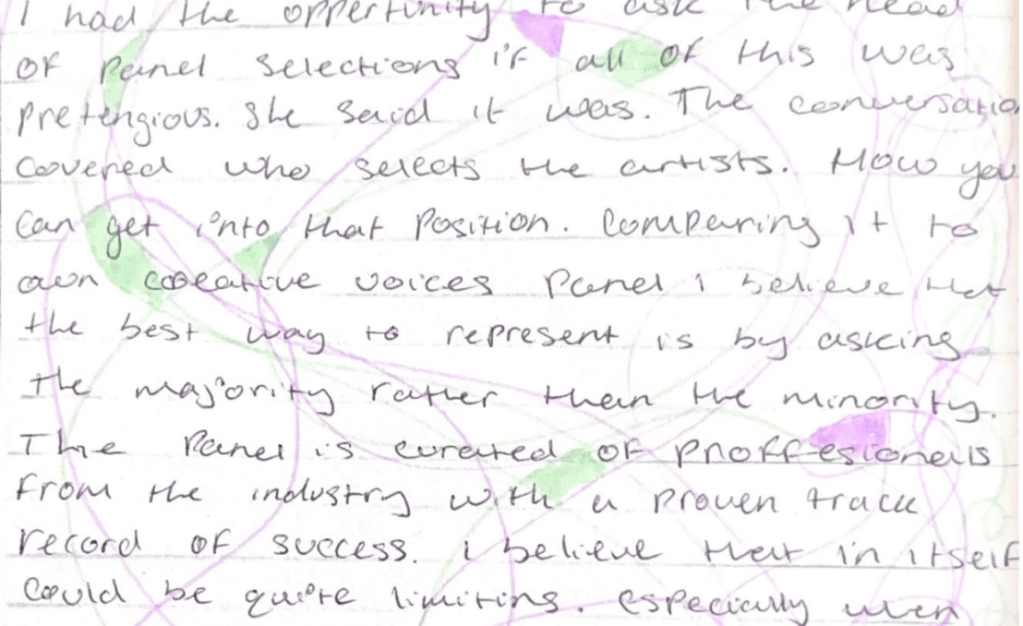
Extract from art journal.
From the small elements of texts being unreadable for the public due to aesthetics being prioritised, the lack of resource material beyond press week. Small elements like those really impact on how the visitors the following week felt and interacted with the work. How they would engage or disconnect with what was being represented to them. It was slightly ironic because even the act of lacking resource material, information guides even to the first week of invigilators, somehow fed into that theme of segregation. Which was ironic considering the piece of art and what the artist holds dear. But, the elements of interacting with the guests beyond press week allowed me to see the full extent of the impact of the work and how the work itself can translate beyond texts written to explain the work.
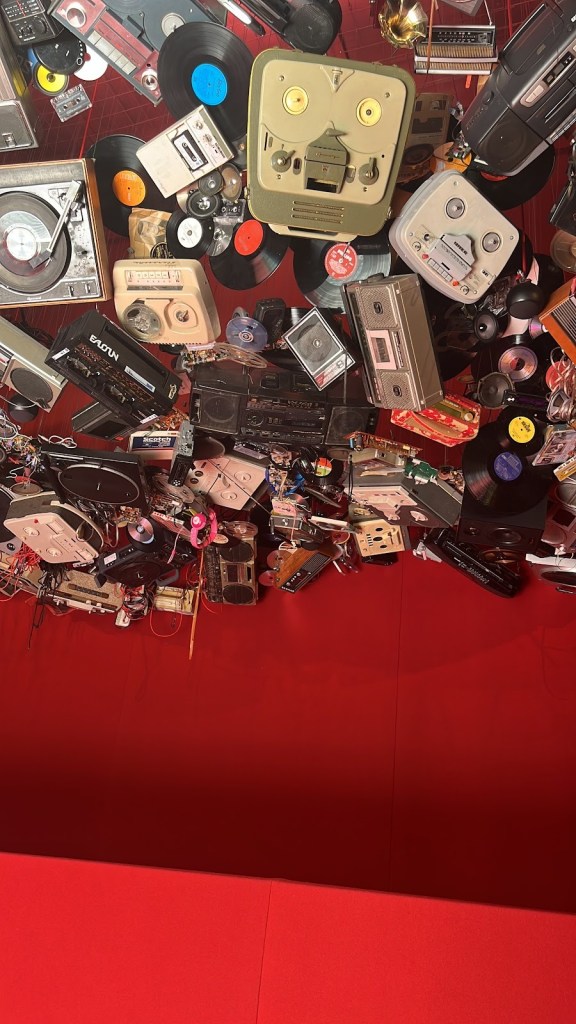
During my duties invigilating Canto 3, I’ve been able to have the most honest interactions with the general public. A lot of people reminiscing over a time period they visually remembered, seeing objects that they were physically impacted by during their lifetime. This for me brought back some justice of how we represent the community and how communicate narratives of what we’re trying to say through different elements. (Which also reflects back to the now second question of, how do we create and explore within a multi-medium institute? Showing just an object alone can tell a thousand intimate words to the audience.)
Another country which was able to do this successfully and really captivated my research was Czech Republic;
The heart of a giraffe in captivity is twelve kilos lighter. I will let the writing on the image below from the art journal explain and display my feelings for me.
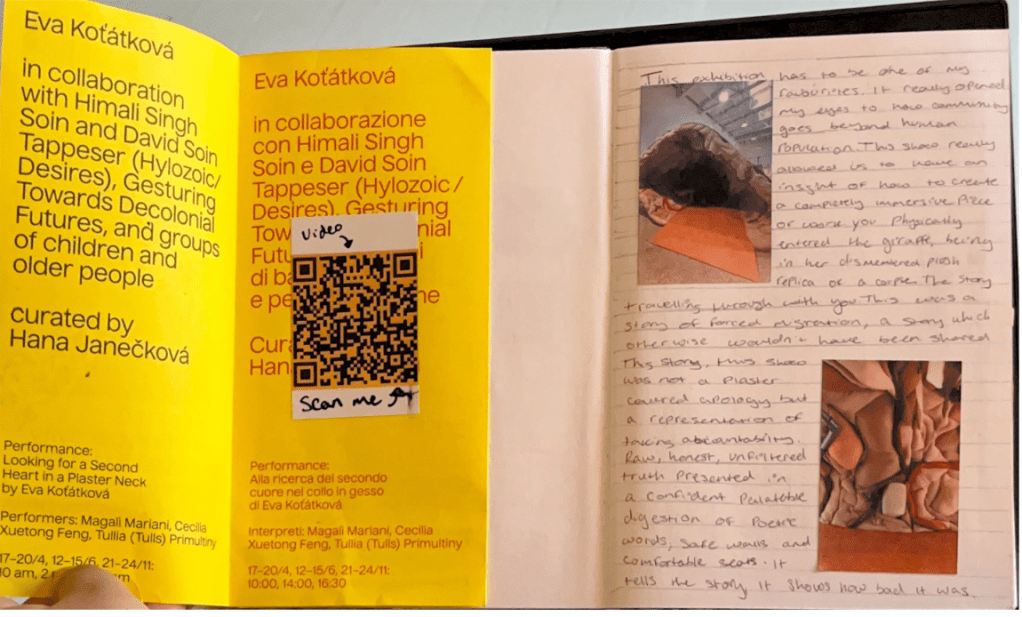
The honesty and interactivity of the piece allowed it to represent many different people. The children ran amongst the innards of the giraffe, some listening to the story and some enjoying the construct of the art. Adults sat, listened, moved through the animal as it took in the narrative. This piece allowed me to envision not just human history, but a wider concept of who a community could be – down to the animals.
My physical journal continues to explore more of my research, building and developing as I continue my journey in Venice. I believe that this research will continue beyond my time here.
This work has inspired me, finding the differences between communities, the threads that connect our individual stories and how we come together.
 Riz Ali